
How to Choose Surprise Cakes With Hidden Fillings
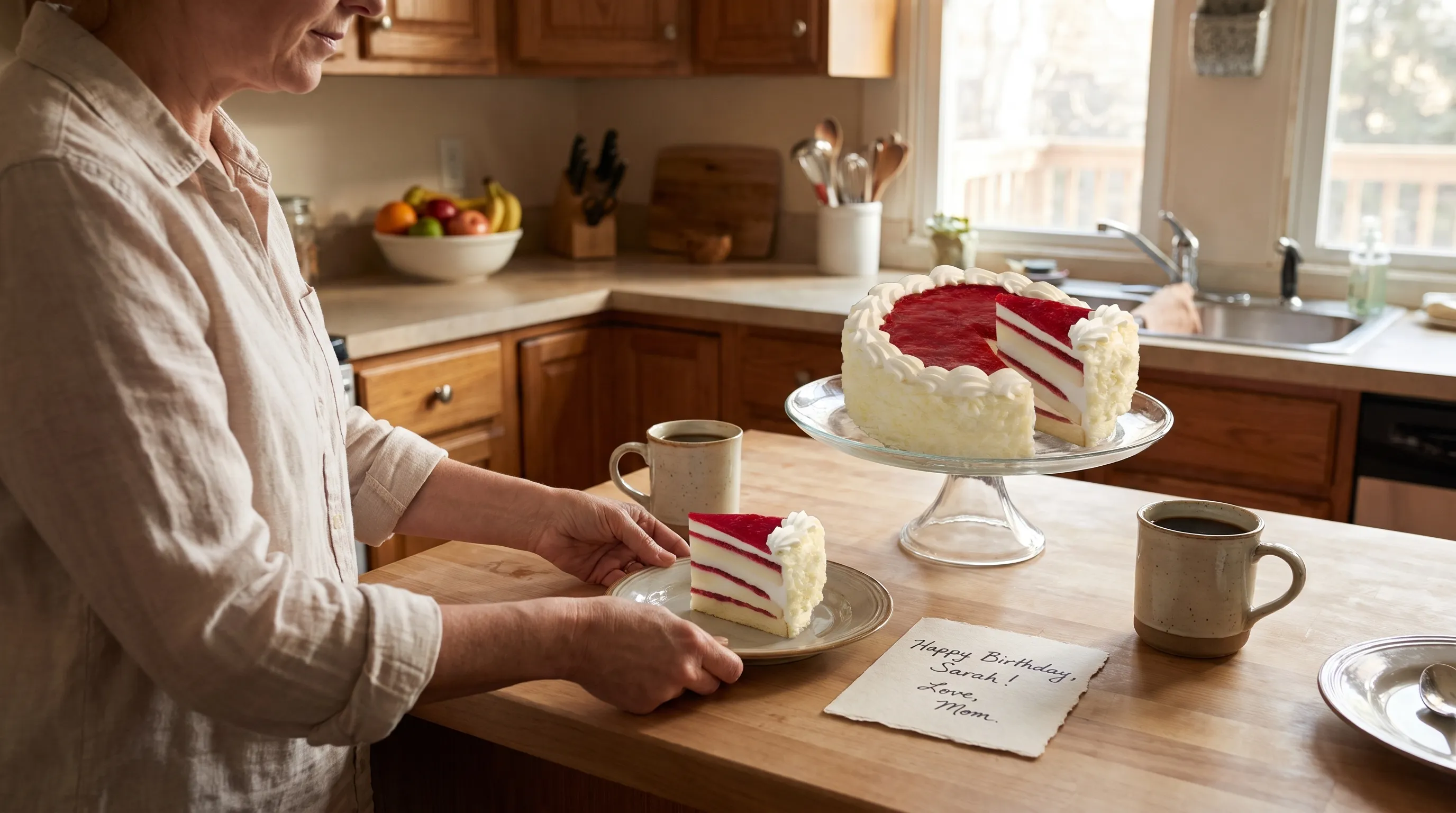
The best surprise cakes hide something the recipient will enjoy eating, not just something that looks impressive in a photo. A raspberry layer beneath white chocolate frosting, a pocket of colorful candies or a soft caramel center can each create a memorable first slice. Choosing well means matching that reveal to the person’s taste, the number of guests and the way the cake will reach the celebration.
Start by deciding what should happen when the knife goes in: a contrasting layer appears, sweets tumble out or a soft filling becomes visible. Then check whether the bakery offers that exact interior. A cake described as “filled” does not automatically have a hollow center or a flowing middle.
Choose the right kind of hidden center
The filling determines both the surprise and the eating experience. Before comparing decorations, choose the kind of reveal you want.
| Hidden center | What happens when sliced | Best suited to | What to confirm |
|---|---|---|---|
| Contrasting filling layers | Fruit, cream or chocolate appears between sponge layers | A flavor-focused celebration | Filling flavor, thickness and color |
| Candy-filled cavity | Loose sweets spill from a hollow center | A playful group reveal | Candy type, cavity size and age suitability |
| Soft sauce center | Caramel, chocolate or another sauce becomes visible or flows | A dessert-focused occasion | Serving temperature and expected consistency |
| Colored cake or filling | A concealed color appears inside | A celebration with a meaningful color | Exact shade, ingredients and design availability |
For surprise cakes, ask the seller to describe the cut slice rather than relying on an exterior photograph. “Chocolate cake with chocolate filling” tells you little about whether the center is layered, hollow or soft.
A useful question is: “When we cut the first wedge, what will we see, and will anything spill out?” That gives the bakery a concrete expectation to confirm. It also prevents confusion between an edible hidden filling and a surprise gift box containing an ordinary cake.
Match the flavor to the recipient, not just the reveal
A dramatic center cannot make up for a flavor the recipient dislikes. Start with their usual dessert choice, then add one contrasting element. Someone who enjoys dark chocolate may appreciate a tart fruit layer; someone who prefers lighter desserts may favor a fruit-forward filling over multiple rich components.
Think about sweetness, texture and intensity together. Sweet frosting, sweet sponge and candy filling can become overwhelming. A contrasting fruit filling can bring acidity, while a crisp inclusion can add texture to a soft cake.
The most successful surprise cakes usually keep a familiar favorite at their core. The surprise comes from how that flavor appears, not from making every element unexpected.
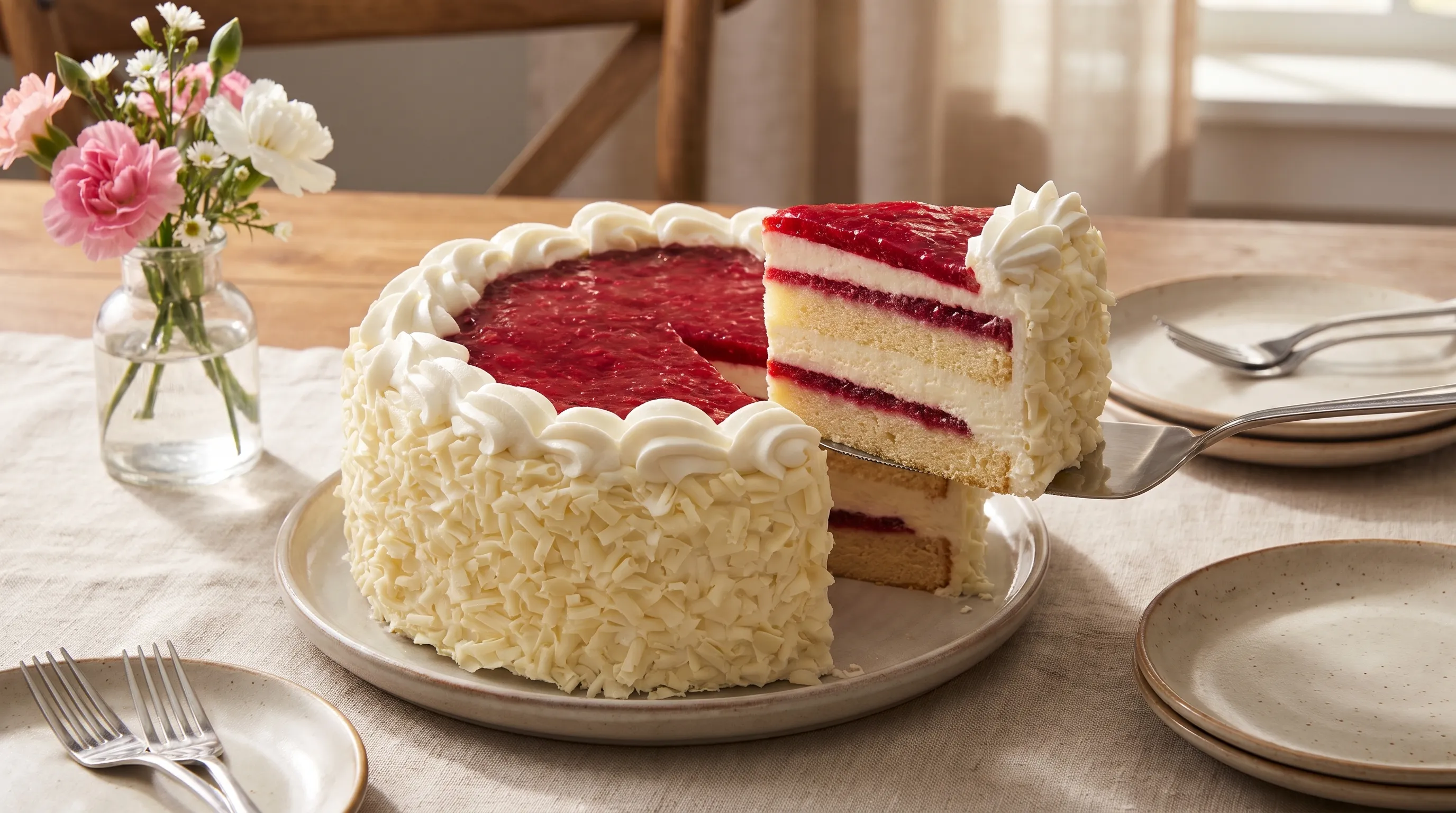
For a gift going to Canada, the White Chocolate Raspberry Cake - Canada is listed with raspberry filling, illustrating a sweet white-chocolate and fruit pairing. Do not assume that a filled cake includes a candy cavity or flowing center, however. Confirm the interior if a particular reveal matters. The product information also notes that appearance can vary by location and flavor substitutions may occur, so check before ordering if raspberry is essential.
For a group with mixed preferences, choose one main flavor and one complementary filling. Several competing fillings make it harder to predict sweetness, slice neatly and accommodate guests’ preferences.
Check texture, structure and serving size
A hidden center changes how a cake behaves once it is cut. Loose candies need room to move, a soft filling needs enough support to stay between the layers and a sauce center may depend on a particular serving temperature.
Ask whether the filling remains in place during transport and whether the cake should be sliced straight from the refrigerator or after a specified resting period. Avoid requesting extra time at room temperature simply to create a more dramatic flow; the bakery’s storage and serving instructions should come first.
When comparing surprise cakes, request the recommended serving count for the actual design, including its center. Diameter alone does not tell you how many useful portions a tall, hollow or heavily filled cake will provide.
Explain whether the cake will be the main dessert or follow a full meal. The bakery can then recommend portions for that setting. A small tasting slice and a generous birthday portion are different requests.
Also consider who will do the cutting. A supported layer cake is generally a more practical choice for an informal gathering than a design that needs careful disassembly. If the reveal requires removing decorations first, get those instructions before the celebration.
Order surprise cakes without losing the filling you chose
When a particular interior is the point of the gift, confirm it before payment. An attractive product photo may show only the outside, and a general request such as “make it a surprise” leaves too much open to interpretation.
Your order notes should identify the filling, the reveal and any acceptable substitutions. For example: “We would like raspberry filling visible between the layers, not mixed into the sponge. Please contact us before substituting another flavor.” This is a request for confirmation, not a guarantee that a bakery can accommodate it.
Useful details to settle include:
- Interior design: Whether the filling is layered, enclosed in a cavity or intended to flow.
- Dietary requirements: Ingredients to exclude and whether cross-contact can be controlled.
- Substitutions: Which changes are acceptable and which require your approval.
- Arrival and storage: The delivery date, receiving arrangements and refrigeration needs.
- Serving instructions: When to unwrap, how to cut and whether any supports need removing.
For a Canadian destination, Expressluv’s guide to choosing a cake gift for delivery in Canada covers address details and product-specific delivery checks. Treat the hidden filling as an additional requirement to confirm, rather than assuming every cake design is available in every location.
Keep the written confirmation with your order details so the person receiving the delivery can follow the same instructions.
Keep dietary information out of the surprise
The interior can be a secret, but allergens and dietary restrictions should not be. Ask the recipient or someone who reliably knows their requirements before choosing the filling.
A cake can contain milk, eggs, wheat, soy, peanuts or tree nuts across several components, including the sponge, frosting, filling and decorations. Candy centers add another set of ingredient labels to check. An egg-free cake is not automatically dairy-free or vegan, and a cake made without nuts is not necessarily suitable for someone who needs protection from nut cross-contact.
For surprise cakes intended for someone with a food allergy, get a clear answer about both ingredients and preparation practices. If the seller cannot confirm suitability, choose a different cake or a nonfood gift rather than relying on assumptions.
Age matters too. Whole nuts, hard candies and small round sweets may be unsuitable for young children. Choose an age-appropriate filling and have an adult manage slicing and serving.
Keep nonedible objects out of the filling. If the design includes toppers, structural supports or decorative pieces, ask which must be removed and tell the person cutting the cake. A hidden message on a separate card is easier to manage than an object concealed inside a slice.
Plan storage before arranging the reveal
A hidden cream or custard layer may require refrigeration even when the outside looks like a standard frosted cake. Ask for storage instructions for the entire finished product, not just the sponge.
For ingredients that require refrigeration, the FDA’s food-storage guidance recommends keeping the refrigerator at 40°F or below. It also advises against leaving foods that need refrigeration at room temperature for more than two hours, reduced to one hour when the temperature is above 90°F. Count time spent transporting, displaying and serving the cake toward that limit.
These limits matter for surprise cakes because the reveal can encourage a long display before anyone starts eating. Take photographs promptly, serve the cake and refrigerate perishable leftovers rather than leaving them out throughout the party.
If you are sending the gift from another country, coordinate with someone near the recipient who can receive and store it. Do not assume the delivery package can safely hold the cake until an evening celebration.
Ask the bakery how long leftovers can be kept, whether freezing is suitable and how to cover cut surfaces. Storage life depends on the filling and preparation, so a rule remembered from a plain sponge cake may not apply.
Make the first slice easy to reveal
The first cut should show the filling clearly without making the cake difficult to serve. Ask whether there is a recommended cutting position or wedge size, especially for a central cavity.
Set the cake on a stable surface with enough space for a plate, knife and server. For a candy spill, use a serving board or platter that can catch the loose sweets. Avoid placing the cake close to the edge of a narrow table.
With surprise cakes, a simple exterior can make the interior more noticeable. A restrained frosting design leaves attention on the contrast inside, while elaborate decorations may need removing before the knife can reach the cake.
If you want a photograph, have the camera ready before cutting. Lift the first slice slowly and follow the bakery’s instructions rather than repeatedly cutting into the center to make the filling move.
For a remote celebration, arrange a call around the recipient’s plans rather than a tightly assumed delivery minute. Allow time for receiving, unpacking and any required refrigeration before the reveal.
Frequently asked questions
What is the difference between a filled cake and a piñata cake? A filled cake usually has a spread, cream, fruit preparation or similar ingredient between layers or inside the sponge. A piñata-style cake has a cavity containing loose sweets or other edible pieces intended to spill out when cut. Confirm the construction because product names vary.
Which hidden filling is best for delivery? There is no single best filling for every journey. Ask which design the bakery recommends for the route, expected conditions and available refrigeration. A supported filling layer may be a more practical choice than a temperature-sensitive flowing center, but the finished cake’s construction matters too.
Can surprise cakes be made for guests with allergies? Sometimes, but suitability must be confirmed with the seller. Ask about every component and the risk of cross-contact. Never treat an ingredient omission or a product name as an allergy-safety guarantee.
Does the four-day cake rule apply to every cake? No. There is no universal rule that every cake remains suitable for four days. Fresh cream, custard, fruit preparations and other fillings can have different storage requirements. Follow the bakery’s instructions for that specific cake and do not use smell or appearance alone to judge safety.
How far ahead should I order a hidden-filling cake? Check the lead time for the exact design and destination. A standard filled cake and a custom candy-center design may have different availability. Confirm the filling, delivery date and substitution policy before placing the order.
Choose the inside first, then the decoration
Narrow your choice to a flavor the recipient loves, a reveal the bakery can confirm and a cake that suits the delivery and storage arrangements. Those three decisions matter more than an elaborate exterior.
When browsing Expressluv’s cakes and gifts by destination, check the individual product details and ask support about any interior requirement that is not clearly described. Keep the filling a surprise for the recipient, not for the person placing the order.


